Wednesday, March 6, 2019

How to reformat a personal computer?

STEPS TO REFORMAT A PERSONAL COMPUTER

1.Start you PC and press key F2,F12 pr delete key (Depend on your PC model)

YOUR PC BIOS setting will be displayed.
Find boot menu.In boot device priority select CD-ROM as first boot device.

2.Your PC will boot from CD and windows Installation will start.Press enter at this screen.
3.Accept License agreement by pressing F8 key.
4.Delete the partitions.
5.Create the partitions.
6.Define the size of partitions.
7.Now select your desired partitions for installation of Windows XP ad press enter.
8.Choose to format the partitions.Choose NTFS file system quick.
9.Setup will format the partitions.
10.After formatting,setup will start copying files on the hard disk.
11.After copying of files,setup will start installing Windows.
12.Select desired language and regional settings,when prompted by setup.
13.Enter windows key. 
14.Type a name of your computer.
15.Select time and date settings and time zone according to your country.
16.Provide network settings for networking PC's or select typical settings and press enter.
17.Setup will install devices and register components.
18.After completion setup will do a cleanup of files and will restart you PC automatically.At this stage you can remove CD


Tuesday, March 5, 2019

How to share file and printer in a computer network

WORKING WITH COMPUTER NETWORK


PREMIRILY STEPS:
1.Creating IP Address
2.Configure IP Address
3.Set windows firewall settings
4.Set up a home or small of office Network

SHARING FILE ON A NETWORK:
1.Place the file inside the folder.
2.Right click the folder.
3.Click properties.
4.Click sharing.
5.Click share this folder on a network
6.Click apply
7.Click OK

CHECKING THE FILE(CLIENT)
1.Click start button
2.Click run
3.Then type \\[IP Address of server]

SHARING PRINTERS ON A NETWORK(SERVER)
1.Click control panel
2.Click add printer
3.Right click printer
4.Click sharing
5.Click share this printer
6.Click apply
7.Click OK

CONNECTING PRINTER ON A NETWORK(CLIENT)
1.Click run
2.Then type \\[IP Address of client]
3.Double right click printer and faxes
4.Right click printer
5.Click connect


Wednesday, January 16, 2019

What is a Network or IP Address

WHAT IS A NETWORK ADDRESS?

Network Address
Image result for what is network address

network address is an identifier for a node or host on a telecommunications networkNetwork addresses are designed to be unique identifiers across the network, although some networks allow for local, private addresses or locally administeredaddresses that may not be unique.

EXAMPLE OF NETWORK ADDRESS
  Related image
IP VERSIONS

IPv4-Internet Protocol Version 4 (IPv4) is the fourth revision of theInternet Protocol and a widely used protocol in data communication over different kinds of networks. IPv4 is a connectionless protocol used in packet-switched layer networks, such as Ethernet.
Related image
IPv6-is a set of specifications from the Internet Engineering Task Force (IETF) that's essentially an upgrade of IP version 4 (IPv4).
Image result for ip version 6
BINARY DIGIT
Image result for binary digits
-Decimal to binary conversion is an important task to understand in IP addressing and Subnetting. IP addressing is a core functionality of networking today. The knowledge of how to assign an IP address, or determine the network or host ID via a subnet, is vital to any good network engineer. Having a good, solid understanding of the simple things makes more complex tasks easier. Here are steps on how to convert a decimal IP address to its binary form, without memorization.

Image result for bytes ip address


A bit (short for binary digit) is the smallest unit of data in a computer. A bit has a single binary value, either 0 or 1. Although computers usually provide instructions that can test and manipulate bits, they generally are designed to store data and execute instructions in bit multiples called bytes.

CLASSES OF IP ADDRESS
Image result for classes of ip address

127 - Loop back Function of a network 


Class D - Use for MULTICAST 


Class E - reserved for FUTURE or EXPERIMENTAL PURPOSES. 


STEPS IN CREATING IP ADDRESS
1.Right click My Network Places

2.Click Properties
Image result for right-click my network places

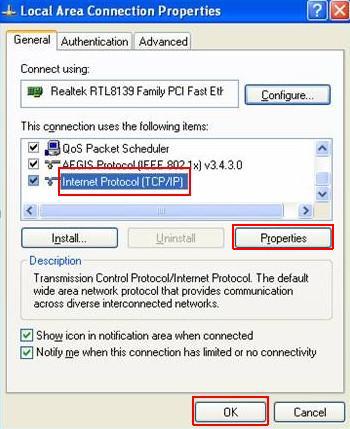
3.Right click Local Area Connection

4.Click Properties
Image result for Right click Local Area Connection

5.Click TCP/IP

6.Click Properties
Image result for click properties

7.Click OK

STEPS IN IP CONFIGURATION
1.Click Start button
Related image


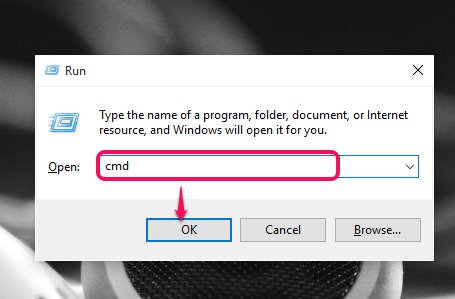
2.Click Run 
Image result for click run

3.Type CMD
Image result for type cmd

4.Type ipconfig
5.Type ping [IP ADDRESS]
Image result for type ping run